


My Life as a Patient
- Mar 12, 2023
- 7 min read
Updated: May 29, 2023
Episode 13 : My life as a Patient has been intense and exhausting.

I continue to look for the magic pill, the next best medicine, the elixir that is going to make me whole again. Although it feels like "we" are striving to find the true answers to my pain and symptoms, it also feels like I am continually shuffled around in the medical system. I don't like this. Last year, I was taking a multi-vitamin and saw my primary care practitioner once a year for a check up. But, since July I have seen over 20 doctors and therapists and I am taking a whole handful of meds and supplements twice a day. I just saw a new rheumatologist yesterday, and that was after seeing a new doctor for an EMG last Friday, the same day I had therapy with a new physical therapist. This is my life as a patient, a new identity, one which I am not willfully acquainted.
This is a different type of post. Normally, I would sit down with a subject related to fibromyalgia, do 10+ hours of research, compile my data, and write a well-documented blogpost article. This is not that. This is personal.
I broke down yesterday. I sat in my principal's office and wept. I collapsed into a chair, covered my face with my hands and told her I wanted my old body back.

I cried and wondered aloud if I was just always going to be in pain. I explained how overwhelmed I was, and how sad I was feeling. I wasn't whining. I was weeping. I wasn't being a baby. I was feeling confused and at a loss as to where to turn. She shut the door and gave me space to express my sadness and fear and offered me my "drug of choice - chocolate, chips, soda, or water", the teacher fix. I took the water. I sighed. I took a moment, gathered up the fragments of my dignity as I reminded myself whispering, "although my body hurts, all four of my limbs work; although light hurts my eyes, I can see; although I am agitated by sound, I can still hear; although I am sad now, I will rise up". That's the closest to a prayer I can muster.
I am not a praying person or a believer in the sense of western religions. I have belief in the human spirit. I also believe in physical and spiritual practices that help the body heal itself. So, in this sense, what is the next best step?
I recently went to a memorial service and was moved to action by my grief. I did something I never do and I stood up and spoke eloquently about what this 90 year old woman had meant to me. I was motivated by this woman's seemingly unending flow of love and boundless energy. She was active her whole life in social work and in ministry and believed in the actions she took for the greater good and in her faith in a loving God. In fact, at 50 years old she went back to school to earn her Master's in Divinity and for the next 25 years served as an interim minister in callings all around the U.S. as far reaching as Hawaii and Vermont. Her life is a good reminder to me as she, this beautiful woman, lived an amazing and long life, and did so with a chronic lung disease. She had pulmonary fibrosis, "a lung disease that occurs when lung tissue becomes damaged and scarred. This thickened, stiff tissue makes it more difficult for your lungs to work properly. As pulmonary fibrosis worsens, you become progressively more short of breath." - literally - a disease that slowly sucked the wind and the life out of her.
She, too, was a patient. I wonder, did she also look for a medical elixir to cure her body? Did she feel shuffled from this doctor to that? Did she become bewildered by the numerous tests and treatments? Was she befuddled by the minimal or lack of results? Or, did she accept her diagnosis with grace and rest in her faith and her understanding that this life has an exit ticket? If the former is true, then I must learn this lesson.
I am diagnosed with Fibromyalgia. All of my symptoms hold true for this diagnosis.
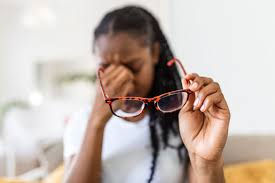
Except, I also have had 2 excruciating bouts of uveitis which felt like my eye was being pounded by a sledge hammer. Uveitis is inner-ocular inflammation that affects the middle part of the eye between the white part and the retina and it is an extremely painful autoimmune response to an underlying condition. Uveitis is rare. Yet, I have had it twice which means I get to do the medical shuffle again. I get to visit rheumatologists, ophthalmologists, neurologists, and again do more blood work, spit tests, urine analyses, EMG, EEG, and a multitude of other lab tests. It is A LOT!
How do I accept this shuffle with grace? How do I organize my brain to accept my life as a patient? This is a part of my identity now. As a patient, my life seems to consist of constant medical appointments, treatments, and adjustments. I am learning to navigate the medical system and advocate for myself. But...
As an African-American woman this can be tough and may mean sometimes reading my new doctors. Like "reading the room", unfortunately, I am learning to adjust the way I tell my story to fit the scenario.

In the past year, I have noticed generally, old stodgy white male and white female doctors trained in the 1980's, though considered experts, usually treat me differently than younger doctors - white or of color - trained in the 21st century. For example, my white pain management doctor's tone with me was gruff and he just wanted to throw pills at me and send me on my way when we met. But, when he found out I was a *doctor and had completed a dissertation on a topic he was interested in, then we had a real conversation, and my treatment changed. The compassion poured out and suddenly, I felt he thought I was worth his time. My first rheumatologist, a white woman, rushed through my chart and decided, with a clipped voice, that I had diffuse body pain and without ever looking me in the eye said, "Cymbalta is an option for chronic pain, or gabapentin, to be prescribed by your primary care" and *poof* she was out the door. The end. There was no time for questions or discussion; I was left on the table in my gown wondering what kind of care this was.

On the other hand, my new ophthalmologist, also white, was immediately compassionate walking in the door. He had my chart in hand and started with,

"Hello Karen, Ooooh, I am so sorry. I see this is the second time you have had to go through this. Well, let's see what we can do to make you feel better." My new rheumatologist, an Asian man, walked in the room, shook my hand, reviewed my chart with me and asked if everything sounded right, then proceeded to listen to my story. In the process he paused to say softly and with care, "it also says here you are a survivor of sexual assault and rape. I am so sorry that happened to you. But, it looks like you have been undergoing therapy for a year or so. Do you feel it is helping?" and we had a conversation about that. He also said, "your symptoms are diffuse, which makes it more interesting" and he smiled compassionately, "but together, we're going to figure this out so you have some answers and hopefully we can get you feeling better."

It sounds like the patient's version of utopia, right? Doctors that care, doctors that have read the chart, eye contact, compassion dripping from the walls of the exam room. It can't be real. But it is. And this is how it should be. It is called patient centered care and it should be the norm. Now, can I chalk up the way I was treated in the first two examples in this article to structural racism in medicine? Yes. Implicit bias is a well-documented problem in medicine and can be attributed to many doctor's treatment of people of color and particularly darker skinned people. This is a topic for another, longer article and I will get into that in later posts. But today, this is how I describe the difference between the older knowledge-centered doctors, and the newer patient-centered doctors.
Despite the challenges that come with being a patient, I have found that younger doctors trained in the 21st Century are tending to make it easier. My life as a patient is not a preferred identity, but if it is inevitable, the better bedside manner and the patient-centered approach is welcoming. Many new doctors, and thankfully the ones I have encountered recently, have been trained and understand the impact of structural racism which, as an African-American woman makes sitting in one office after another more positive and productive. In this sense, they have helped me manage my condition. The new doctors are making it easier to navigate the medical shuffle from doctor to doctor as we continue to search for the root cause of what ails me.
* Note: I am not a medical doctor; I earned my doctorate in Educational Leadership at Hamline University in Saint Paul, Minnesota.

If you enjoyed this post, share it with your friends and colleagues, and consider becoming a subscriber. If you have any tips or suggestions about how to better cope with chronic pain, leave a comment. I would love to hear from you!
Karen Palmen, EdD is a veteran educator in Saint Paul, Mn. She teaches Dance and English at Saint Paul Central High School. She has an active TikTok page that features humorous, political, mental health, and educational content (kickin it with karen). And a a dormant YOUTUBE channel with the same name, featuring fermented foods and other cooking oddities.
DISCLAIMER: THIS BLOG DOES NOT PROVIDE MEDICAL ADVICE
The information, including but not limited to, text, graphics, images and other material contained on this website are for informational purposes only. No material on this site is intended to be a substitute for professional medical advice, diagnosis or treatment. Always seek the advice of your physician or other qualified health care provider with any questions you may have regarding a medical condition or treatment and before undertaking a new health care regimen, and never disregard professional medical advice or delay in seeking it because of something you have read on this blog.
Sources:
“Pulmonary Fibrosis.” Mayo Clinic, Mayo Foundation for Medical Education and Research, 6
Mar. 2018, https://www.mayoclinic.org/diseases-conditions/pulmonary-fibrosis/symptoms-causes/syc-20353690#:~:text=Pulmonary%20fibrosis%20is%20a%20lung,progressively%20more%20short%20of%20breath.
“Racial Discrimination in Healthcare.” How Structural Racism Affects Healthcare, 15 June
2021, https://www.stkate.edu/academics/healthcare-degrees/racism-in-healthcare.



Comments